
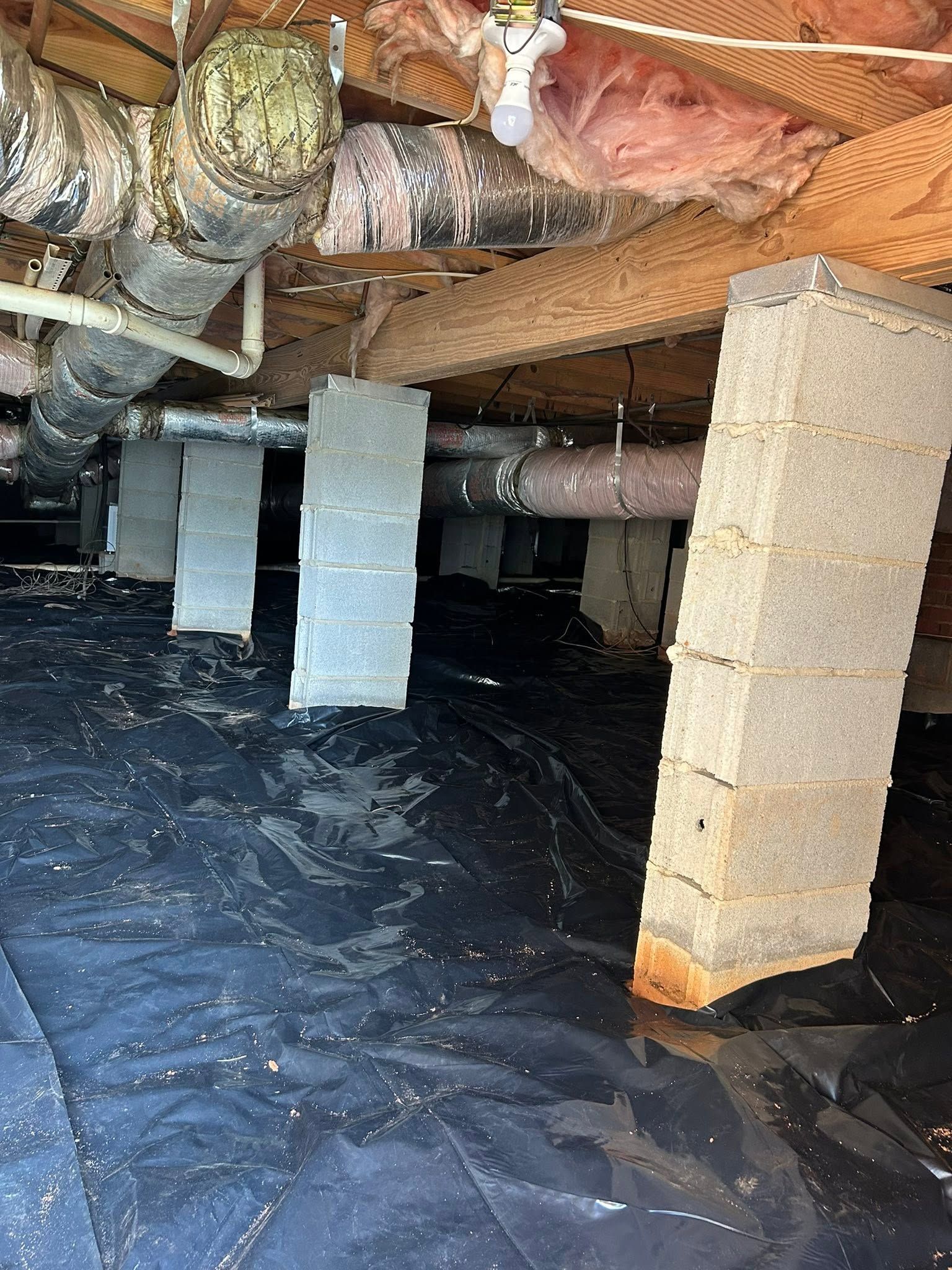
Foundations Protected From Ground Moisture Intrusion
Crawl Space Vapor Barrier Installation in Spartanburg for homes where ground moisture contributes to wood damage and elevated humidity
Ground moisture vapor rises continuously through exposed dirt crawl space floors, saturating the air beneath your home and creating the damp conditions that encourage termite activity, wood rot, and mold growth across structural components. A vapor barrier blocks this moisture transmission by sealing the crawl space floor with durable polyethylene sheeting that prevents water vapor from entering the space above. Bell Pest Control installs vapor barriers across Spartanburg properties where dirt crawl spaces contribute to recurring moisture problems that compromise structural wood and reduce indoor air quality. The installation creates a permanent barrier between ground moisture and your home's floor system, working as the foundation of comprehensive moisture control strategies.
Vapor barrier installation involves preparing the crawl space floor by removing debris and organic material, grading the soil to eliminate low spots where water collects, then laying heavy-duty polyethylene sheeting across the entire floor surface. Seams are overlapped and sealed to prevent gaps where moisture could penetrate, and edges are secured to foundation walls several inches above grade to create a complete encapsulation that isolates the crawl space environment from ground moisture sources below.
Schedule a crawl space assessment to determine whether vapor barrier installation addresses the moisture sources affecting your property.
What Changes After Professional Vapor Barrier Installation
Professional vapor barrier installation uses six-mil or thicker reinforced polyethylene that resists punctures and tears from crawl space access traffic, unlike thin plastic sheeting that deteriorates within months. The material is cut to fit around piers and foundation penetrations, ensuring complete floor coverage without gaps where moisture vapor could bypass the barrier. Proper installation includes securing the barrier to prevent movement and sealing all overlaps with specialized tape designed for below-grade moisture environments.
Once the vapor barrier is installed, relative humidity in your crawl space drops significantly because the primary moisture source—ground vapor transmission—is eliminated. Wood surfaces that previously felt damp begin to dry, reducing the risk of termite infestation and fungal decay that compromise structural integrity. The crawl space environment stabilizes, creating conditions where supplemental moisture control systems like dehumidifiers operate more efficiently because they're managing humidity from minor sources rather than fighting continuous ground moisture infiltration.
Vapor barriers complement termite prevention efforts by removing the moisture that attracts subterranean termites to structural wood, and they work alongside dehumidification systems by reducing the moisture load these units must remove. The barrier does not address moisture from plumbing leaks, exterior drainage problems, or humid outdoor air entering through foundation vents, so a comprehensive moisture control plan may include additional solutions depending on your property's specific conditions.
Common Questions About This Service
Vapor barrier installation protects crawl space environments, but understanding what the system does and how it works with other moisture control methods helps homeowners make informed decisions.
What thickness of vapor barrier material provides adequate ground moisture protection?
Six-mil polyethylene meets minimum standards for vapor barrier applications, but ten-mil or thicker reinforced sheeting provides better puncture resistance and longevity in crawl spaces where access traffic or sharp gravel could damage thinner materials.
How does a vapor barrier affect termite activity in crawl spaces?
The barrier removes the primary moisture source that raises wood moisture content above twenty percent, making structural lumber less attractive to subterranean termites that require damp wood to sustain colony feeding and cannot survive in consistently dry environments.
When should vapor barriers be installed relative to other crawl space improvements?
Vapor barrier installation typically occurs first because it addresses the largest moisture source, allowing accurate assessment of remaining humidity issues that may require dehumidification, ventilation changes, or drainage improvements to fully resolve.
How long does vapor barrier installation take in typical Spartanburg crawl spaces?
Most residential installations require four to eight hours depending on crawl space size, accessibility, and floor preparation needs, with larger or complex spaces requiring additional time for proper material fitting and seam sealing.
What maintenance does a vapor barrier require after installation?
Periodic inspection ensures the barrier remains intact without tears, punctures, or displaced sections, and minor damage can be repaired with patching tape before moisture transmission resumes through compromised areas.
Bell Pest Control uses durable vapor barrier materials suited for long-term crawl space moisture protection. Request a crawl space inspection to evaluate whether vapor barrier installation will address the moisture conditions affecting your home's foundation and structural components.